


What Is Topical Authority in SEO?
If you want faster rankings, higher organic traffic, and long-term SEO success, learning how to build topical authority for faster rankings is essential. This guide will explain the concept, benefits, and step-by-step strategies to help your website dominate search results.
Topical authority refers to how well your website covers a specific subject in depth and relevance. Instead of ranking for one keyword, Google evaluates whether your site comprehensively answers all related questions within a topic.
For example, a website focusing on digital marketing should cover:
- SEO fundamentals
- On-page SEO
- Technical SEO
- Link building
- Local SEO
- AI in SEO
- SEO tools and strategies
When Google sees consistent, high-quality content around one theme, it rewards the site with better visibility and faster rankings.
Why Topical Authority Is Important for Faster Rankings
Building topical authority directly impacts how quickly and sustainably your content ranks on Google.
Key Benefits:
- Faster keyword rankings
- Higher trust and credibility
- Increased organic traffic
- Better internal linking structure
- Improved crawl efficiency
- Lower dependency on backlinks
Google’s algorithm favors expertise, experience, authority, and trust (E-E-A-T). Topical authority strengthens all four.
How Google Evaluates Topical Authority
Google doesn’t rank pages in isolation—it evaluates your entire website ecosystem.
Key evaluation signals include:
- Content depth and relevance
- Semantic keyword coverage
- Internal linking patterns
- Content freshness
- User engagement metrics
- Consistency of topic focus
If your website answers user intent better than competitors, Google sees it as an authoritative source.
Step 1: Choose One Core Topic (Niche Focus)
The foundation of topical authority starts with focus. Avoid covering unrelated topics.
Example:
❌ Digital marketing + health + fashion
✅ Digital marketing → SEO → AI SEO → Local SEO
Choose a niche aligned with your services or business goals. A narrow focus helps Google clearly understand what your website is about.
Step 2: Perform Topic-Based Keyword Research
Traditional keyword research focuses on volume. Topical authority requires semantic keyword research.
Include:
- Primary keyword
- Secondary keywords
- Long-tail keywords
- Related questions (People Also Ask)
- Entity-based keywords
For this topic, examples include:
- How to build topical authority
- Topical authority SEO strategy
- Topical relevance in SEO
- Content clusters for SEO
- Faster rankings with topical authority
Step 3: Create Content Clusters (Pillar + Supporting Pages)
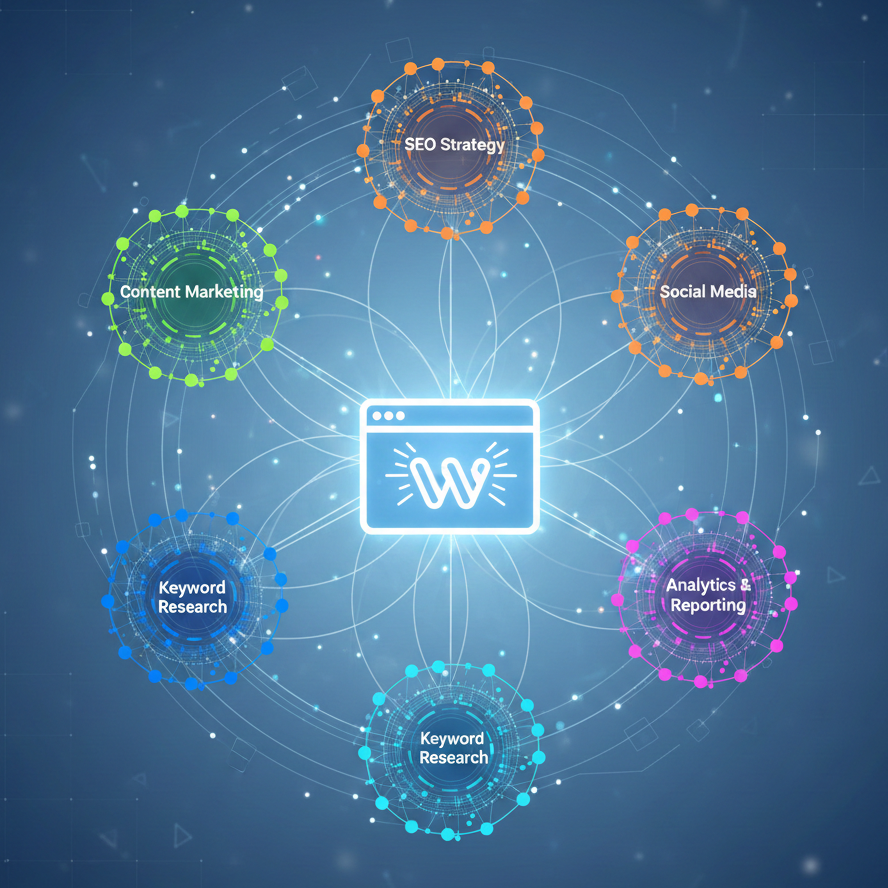
Content clustering is the core strategy behind topical authority.
Structure:
- Pillar Page: Broad, comprehensive guide
- Cluster Pages: In-depth articles on subtopics
- All pages internally linked
Example:
Pillar: How to Build Topical Authority for Faster Rankings
Clusters:
- On-page SEO best practices
- Internal linking strategies
- Content freshness in SEO
- Semantic SEO explained
This structure signals topical expertise to Google.
Step 4: Publish In-Depth, High-Quality Content
Thin content cannot build authority. Every article should:
- Fully satisfy search intent
- Provide actionable insights
- Be longer than competitor content
- Use data, examples, and structure
Aim for topical completeness, not just word count.
Step 5: Optimize Internal Linking Strategically
Internal links connect your topic ecosystem and help Google understand hierarchy.
Best Practices:
- Link pillar → clusters
- Link clusters → pillar
- Use keyword-rich anchor text
- Avoid orphan pages
Strong internal linking accelerates indexing and rankings.
Step 6: Use Semantic SEO & Entities
Google understands topics, not just keywords. Semantic SEO helps your content align with Google’s knowledge graph.
How to optimize:
- Use synonyms and related terms
- Answer multiple user intents
- Include entities (brands, tools, concepts)
- Write naturally for humans
This improves relevance and authority signals.
Step 7: Keep Content Fresh and Updated
Topical authority is not a one-time effort.
Refresh content by:
- Updating statistics
- Adding new sections
- Improving internal links
- Optimizing for new keywords
Fresh content maintains rankings and authority.
Step 8: Build Trust Signals (E-E-A-T)
To strengthen authority:
- Add author bios
- Showcase expertise
- Include real experience
- Link to credible sources
- Maintain consistent branding
Trust accelerates ranking improvements.
Step 9: Measure Topical Authority Growth
Track performance using:
- Google Search Console
- Keyword visibility growth
- Internal link coverage
- Organic traffic by topic
- Ranking speed for new posts
Improved topical authority leads to faster indexation and quicker rankings.
Common Mistakes That Prevent Topical Authority
Avoid these errors:
- Publishing random topics
- Keyword stuffing
- Weak internal linking
- Thin AI-generated content
- Ignoring search intent
Consistency and depth win in modern SEO.
Final Thoughts: Topical Authority Is the Future of SEO
Understanding how to build topical authority for faster rankings gives your website a massive competitive edge. Instead of chasing individual keywords, you build a content ecosystem that Google trusts.
When done correctly, topical authority:
- Reduces reliance on backlinks
- Improves ranking speed
- Builds long-term organic traffic
- Positions your brand as an industry leader
Start with one topic, go deep, stay consistent—and rankings will follow.