



What is a Digital Marketing Roadmap?
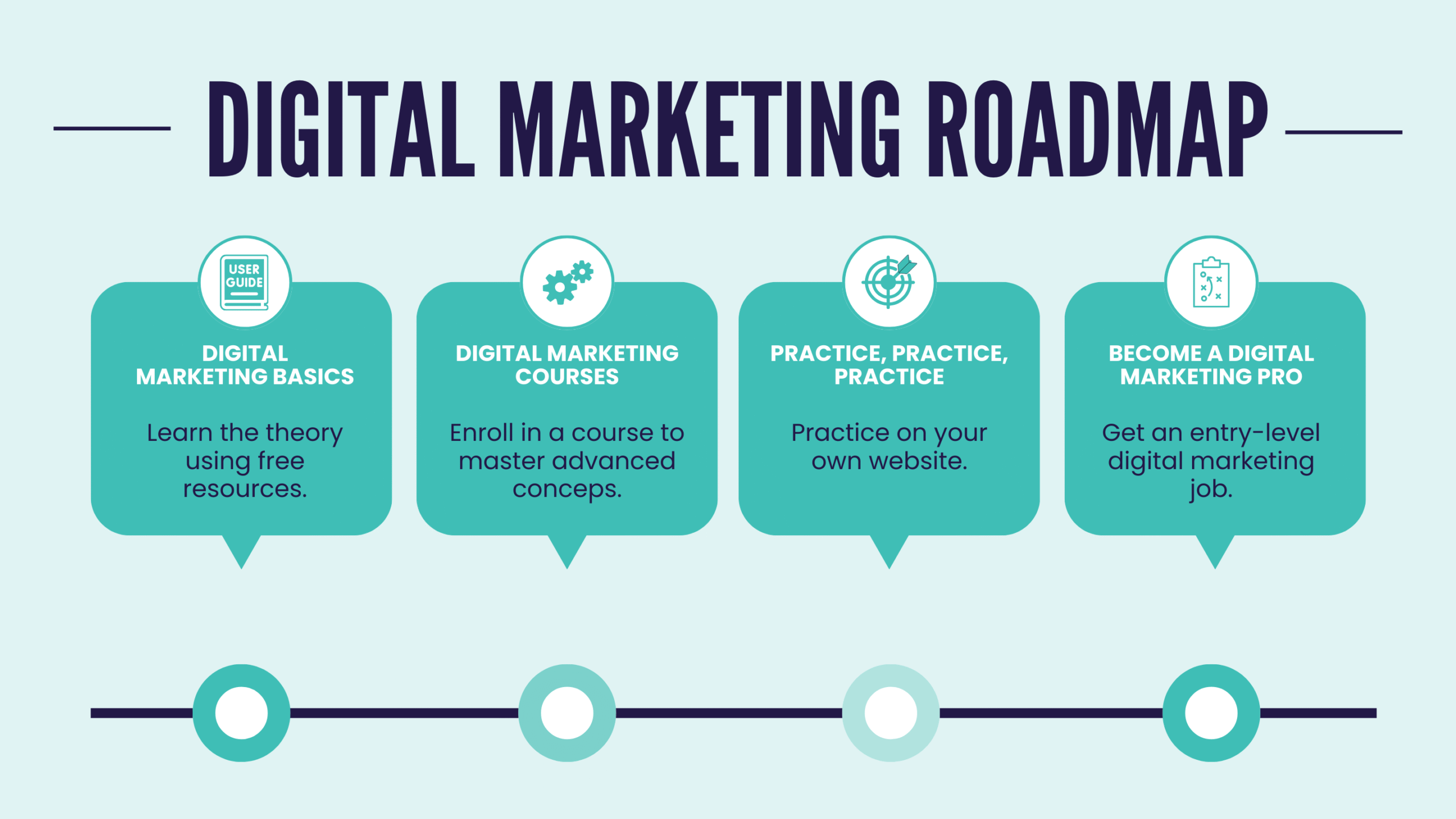
A digital marketing roadmap is a strategic plan that outlines all marketing activities, campaigns, and initiatives for your business. It provides a clear path for achieving marketing objectives, prioritizes efforts, and allocates resources effectively. When you know how to create a digital marketing roadmap for businesses, you gain a blueprint to guide your digital marketing team, stakeholders, and campaigns.
Key Benefits of a Digital Marketing Roadmap:
- Aligns marketing strategies with business objectives
- Helps track performance and ROI of marketing campaigns
- Identifies priority initiatives for maximum impact
- Optimizes resource allocation and budget planning
Step 1: Define Your Business Goals
The first step in learning how to create a digital marketing roadmap for businesses is understanding your business objectives. Your roadmap should align with your company’s vision and measurable goals.
Tips for Defining Goals:
- Use the SMART framework: Specific, Measurable, Achievable, Relevant, Time-bound
- Identify key performance indicators (KPIs) for each goal
- Consider short-term and long-term objectives
By defining clear goals, your roadmap will have a strong foundation for success.
Step 2: Understand Your Target Audience
No marketing strategy succeeds without a deep understanding of your target audience. When you know how to create a digital marketing roadmap for businesses, audience insights are crucial for shaping campaigns.
How to Identify Your Target Audience:
- Create detailed buyer personas including demographics, interests, and pain points
- Analyze customer behavior using analytics tools like Google Analytics
- Segment audiences based on buying behavior, engagement, and preferences
Knowing your audience ensures your digital marketing efforts are personalized and effective.
Step 3: Conduct a Digital Marketing Audit
Before creating your roadmap, it’s essential to assess your current digital marketing performance. A digital marketing audit helps identify strengths, weaknesses, opportunities, and threats.
Steps for a Marketing Audit:
- Review website performance, SEO, and content strategy
- Analyze social media engagement and campaigns
- Assess email marketing and lead generation efforts
- Evaluate paid advertising performance
This step provides valuable insights for building an actionable roadmap and improves your understanding of how to create a digital marketing roadmap for businesses effectively.
Step 4: Identify Key Marketing Channels
A successful digital marketing roadmap highlights the marketing channels that deliver the best results for your business. Not all channels will suit every business, so selection should be strategic.
Popular Digital Marketing Channels Include:
- SEO (Search Engine Optimization): Improve website visibility and organic traffic
- Content Marketing: Blogs, videos, infographics, and eBooks
- Social Media Marketing: Engage audiences on platforms like Instagram, LinkedIn, Facebook, and X (Twitter)
- Email Marketing: Nurture leads and maintain customer relationships
- Paid Advertising (PPC): Google Ads, social media ads, and retargeting campaigns
By carefully selecting channels, you can maximize ROI and ensure your roadmap drives results.
Step 5: Set a Timeline and Prioritize Initiatives
A key part of how to create a digital marketing roadmap for businesses is organizing initiatives in a clear timeline. Not all strategies can be executed at once, so prioritization is critical.
How to Prioritize:
- Focus on high-impact, quick-win activities first
- Allocate resources based on potential ROI
- Use a Gantt chart or roadmap software for visual planning
Having a timeline ensures that your team remains aligned and campaigns launch smoothly.
Step 6: Define KPIs and Metrics
Tracking performance is essential for a successful digital marketing roadmap. KPIs help measure progress and guide future decisions.
Important KPIs to Track:
- Website traffic and page performance
- Conversion rate and lead generation
- Social media engagement and reach
- Email open and click-through rates
- ROI on paid advertising campaigns
By monitoring metrics, businesses can refine strategies, optimize campaigns, and maximize results.
Step 7: Build a Content Strategy
Content is the backbone of digital marketing. When creating a digital marketing roadmap, a content strategy ensures consistent messaging across all channels.
Steps to Build a Content Strategy:
- Identify content topics based on audience interests
- Plan content types: blogs, videos, infographics, podcasts, social media posts
- Create a content calendar aligned with campaigns and events
- Optimize all content for SEO to boost organic search rankings
A strong content strategy increases brand visibility and supports all other marketing initiatives.
Step 8: Implement Marketing Automation
Marketing automation simplifies repetitive tasks and improves efficiency. Integrating automation tools into your digital marketing roadmap can save time and enhance performance.
Automation Opportunities Include:
- Email drip campaigns and follow-ups
- Social media scheduling
- Lead scoring and nurturing
- CRM integration for personalized marketing
Automation allows your team to focus on strategy, creativity, and high-value tasks.
Step 9: Monitor, Analyze, and Optimize
A digital marketing roadmap is a living document. To achieve success, continuous monitoring and optimization are essential.
Optimization Tips:
- Conduct monthly performance reviews
- Analyze data to identify top-performing campaigns
- Adjust strategies based on metrics and trends
- Test new channels, formats, and tools regularly
This iterative approach ensures your roadmap remains effective and aligned with business goals.
Step 10: Communicate the Roadmap Across Teams
Finally, an effective digital marketing roadmap requires team collaboration. All stakeholders should understand priorities, responsibilities, and timelines.
Ways to Ensure Effective Communication:
- Use project management tools like Trello, Asana, or Monday.com
- Share visual roadmaps with teams and leadership
- Conduct regular strategy meetings and updates
A well-communicated roadmap promotes accountability, coordination, and successful execution.
Conclusion
Learning how to create a digital marketing roadmap for businesses is the key to driving measurable growth and staying competitive in the digital landscape. By following these steps—defining goals, understanding your audience, auditing current strategies, selecting the right channels, prioritizing initiatives, building content, integrating automation, and continuously optimizing—businesses can achieve marketing success and improve ROI.
Start creating your digital marketing roadmap today and take a strategic approach to grow your business in the digital era.