


What Is Performance Marketing?
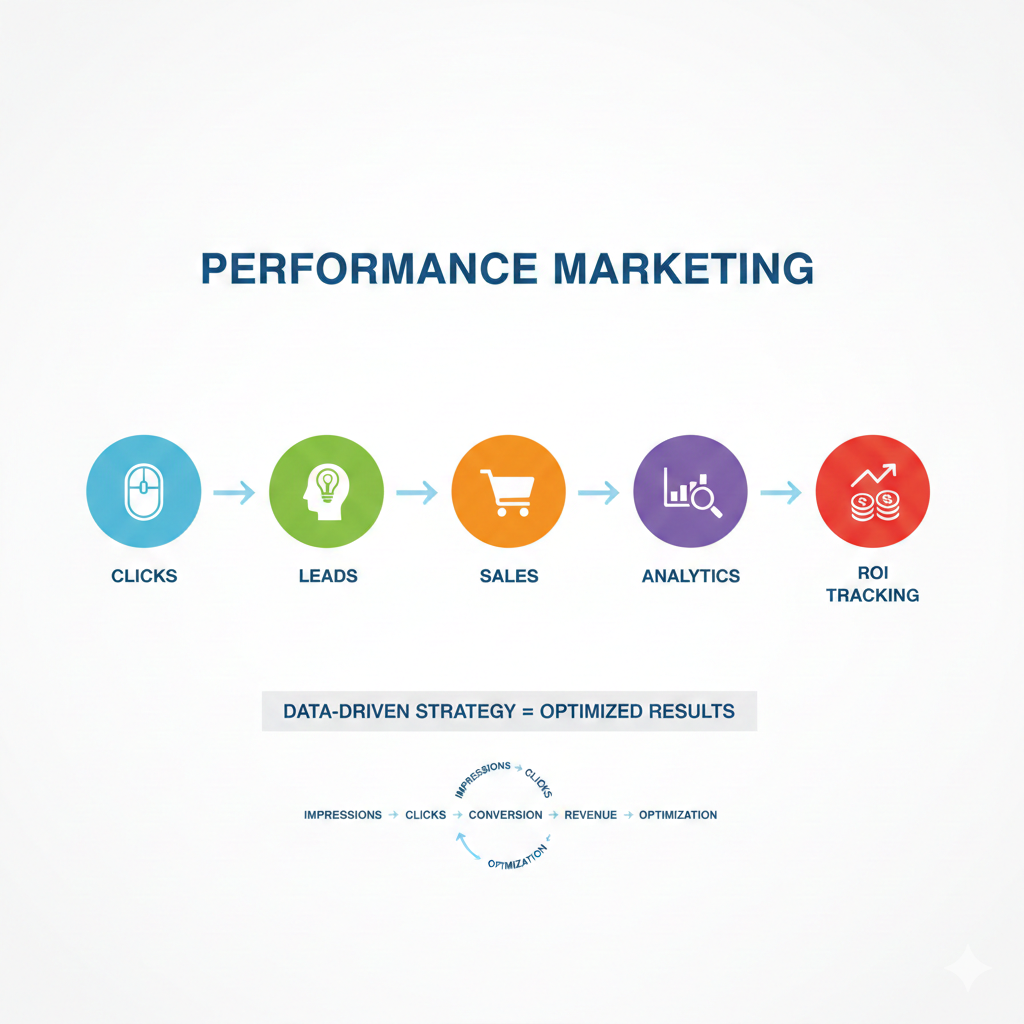
Scale businesses using performance marketing is essential for startups, SMEs, and enterprises looking to maximize ROI and drive consistent revenue growth.
Performance marketing is a digital marketing strategy where businesses pay based on measurable results such as impressions, clicks, leads, app installs, or sales. Unlike traditional branding campaigns, performance marketing ensures every rupee or dollar spent is tracked and optimized.
When learning how to scale businesses using performance marketing, understanding its foundation is crucial. Performance marketing combines advertising platforms, analytics tools, and conversion optimization to achieve growth goals.
Key performance marketing channels include:
- Google Ads (Search, Display, YouTube)
- Meta Ads (Facebook & Instagram)
- LinkedIn Ads
- Native Advertising
- Affiliate Marketing
- Influencer Performance Campaigns
Why Performance Marketing Is Essential for Business Scaling
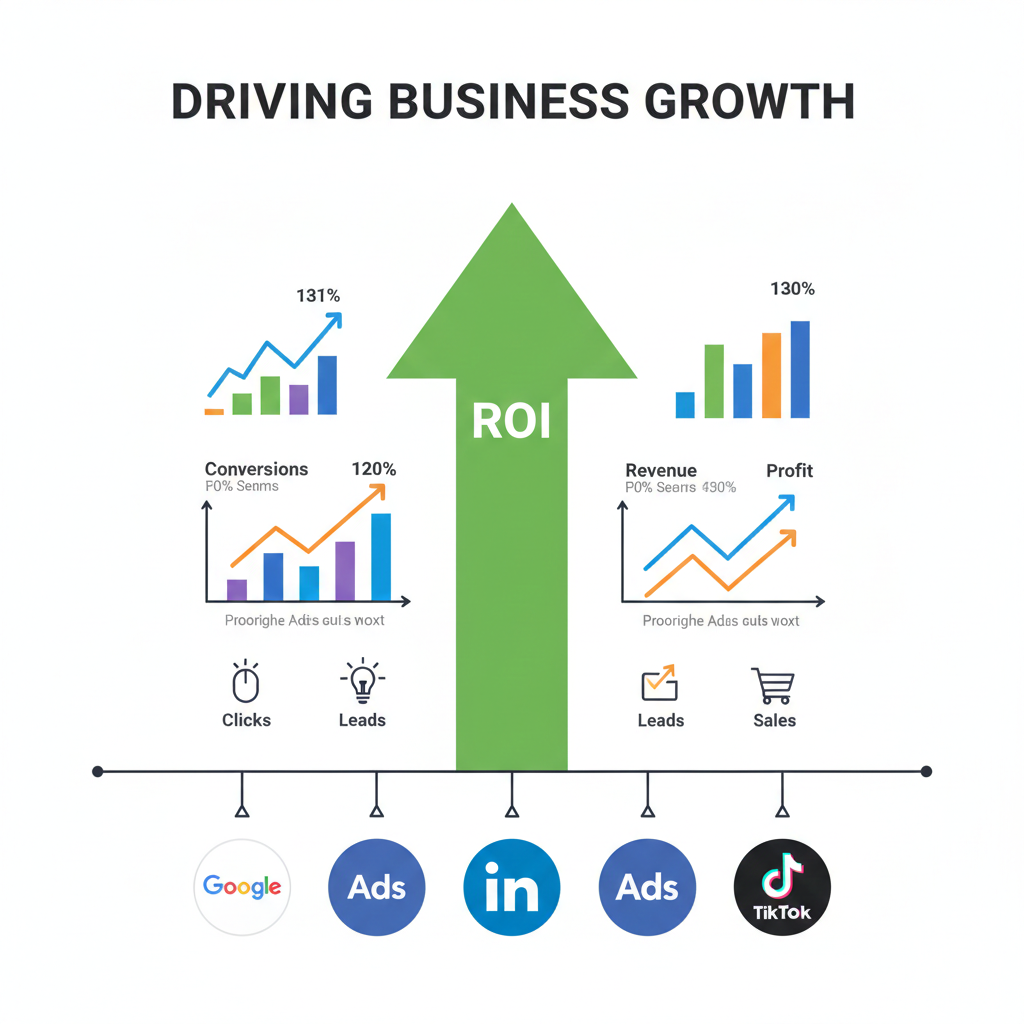
To understand how to scale businesses using performance marketing, you must first know why it’s so powerful:
1. Measurable ROI
Every campaign is tracked using KPIs like CPA, ROAS, CTR, and conversion rates.
2. Cost Efficiency
Budgets are allocated only to campaigns delivering results.
3. Faster Growth
Real-time data allows quick optimization and faster scaling.
4. Predictable Revenue
Once campaigns stabilize, results become consistent and scalable.
Performance marketing eliminates guesswork and allows businesses to grow with confidence.
How to Scale Businesses Using Performance Marketing: Step-by-Step Strategy
1. Define Clear Business Goals and KPIs
Scaling begins with clarity. Before launching campaigns, businesses must define:
- Revenue targets
- Cost per acquisition (CPA)
- Return on ad spend (ROAS)
- Lead volume goals
- Customer lifetime value (CLV)
Clear KPIs ensure that performance marketing efforts align with overall business growth.
2. Identify High-Performing Marketing Channels
Not all platforms scale equally for every business. To master how to scale businesses using performance marketing, identify channels delivering the best results.
Common high-performing channels:
- Google Search Ads for high-intent users
- Meta Ads for demand generation
- LinkedIn Ads for B2B scaling
- YouTube Ads for brand + performance hybrid
- Affiliate networks for volume scaling
Start small, test aggressively, and scale what works.
3. Build a Conversion-Focused Funnel
Scaling performance marketing without a strong funnel leads to wasted spend. A well-structured funnel includes:
- Awareness stage (ads & content)
- Consideration stage (landing pages & remarketing)
- Conversion stage (offers & CTAs)
- Retention stage (email, upsells, remarketing)
Optimizing every funnel stage is essential to scale profitably.
4. Optimize Landing Pages for Higher Conversions
A critical factor in how to scale businesses using performance marketing is landing page optimization.
Best practices:
- Clear value proposition
- Fast page loading speed
- Mobile optimization
- Trust signals (reviews, certifications)
- Strong CTA placement
Even small improvements in conversion rates can significantly boost scaling potential.
5. Leverage Data and Analytics for Scaling Decisions
Performance marketing thrives on data. Use tools like:
- Google Analytics 4
- Google Tag Manager
- Meta Pixel
- Heatmaps & session recordings
Analyze metrics such as:
- Conversion rate
- Cost per lead
- ROAS
- Drop-off points
Data-backed decisions allow businesses to scale campaigns confidently.
6. Use A/B Testing to Improve Campaign Performance
Continuous testing is the backbone of how to scale businesses using performance marketing.
Test elements like:
- Ad creatives
- Headlines and copies
- Landing page layouts
- CTAs
- Audience targeting
Winning variations should be scaled, while underperformers are paused.
7. Scale Budgets Strategically (Not Aggressively)
One of the biggest mistakes in performance marketing is scaling budgets too fast. Smart scaling involves:
- Increasing budgets gradually (10–20%)
- Scaling winning ad sets only
- Monitoring frequency and audience fatigue
- Maintaining CPA and ROAS benchmarks
Strategic scaling ensures long-term profitability.
8. Implement Automation and AI in Performance Marketing
Automation accelerates scaling. Tools like AI bidding, automated rules, and CRM integrations help businesses scale without manual overload.
Automation benefits include:
- Smart bidding optimization
- Automated lead nurturing
- Predictive analytics
- Dynamic ad creatives
AI-powered performance marketing is the future of scalable growth.
9. Focus on Retargeting and Customer Lifetime Value
Scaling isn’t just about acquiring new customers—it’s also about maximizing existing ones.
Effective retargeting strategies:
- Website visitor retargeting
- Cart abandonment ads
- Email remarketing
- Upsell and cross-sell campaigns
Higher customer lifetime value makes scaling more sustainable and profitable.
10. Common Mistakes to Avoid While Scaling Performance Marketing
To succeed in how to scale businesses using performance marketing, avoid these mistakes:
- Ignoring data insights
- Scaling without funnel optimization
- Over-reliance on one channel
- Poor tracking setup
- Not investing in creatives
Avoiding these pitfalls ensures stable and predictable growth.
Tools Required to Scale Businesses Using Performance Marketing
Essential tools include:
- Google Ads & Meta Ads Manager
- Google Analytics 4
- CRM tools (HubSpot, Zoho, Salesforce)
- Heatmap tools
- Marketing automation platforms
These tools form the backbone of scalable performance marketing systems.
Future of Performance Marketing and Business Scaling
The future of how to scale businesses using performance marketing lies in:
- AI-driven personalization
- Privacy-first tracking solutions
- Omnichannel performance strategies
- Predictive analytics
- Voice and visual search ads
Businesses that adapt early will dominate their markets.
Conclusion: How to Scale Businesses Using Performance Marketing Successfully
Scaling a business in the digital age requires precision, data, and adaptability. By mastering how to scale businesses using performance marketing, companies can achieve predictable growth, maximize ROI, and outperform competitors.
From goal setting and funnel optimization to automation and analytics, performance marketing provides a proven framework for sustainable business scaling. Brands that invest in performance-driven strategies today will lead their industries tomorrow.